WHAT COMES NEXT
a book exploring the design mind
Concept
Design is cyclical - when something is launched, it can be improved through feedback. Pushing this to its limits, nothing is complete, but merely set aside. Not only is design a cyclical process, but forming our values and world view is as well. When we receive new information, we are constantly updating our knowledge and opinions. This is the process of the Design Mind.
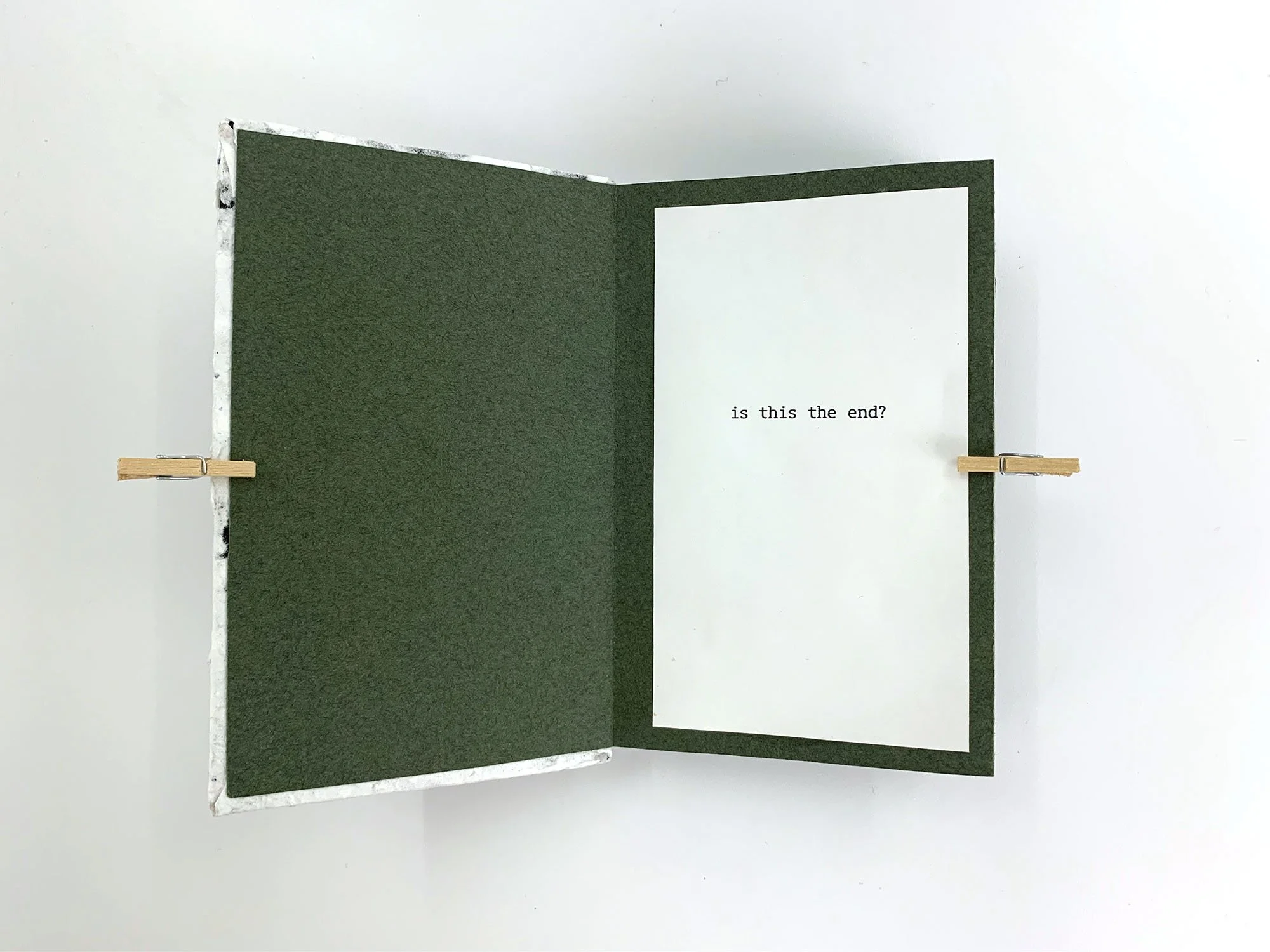
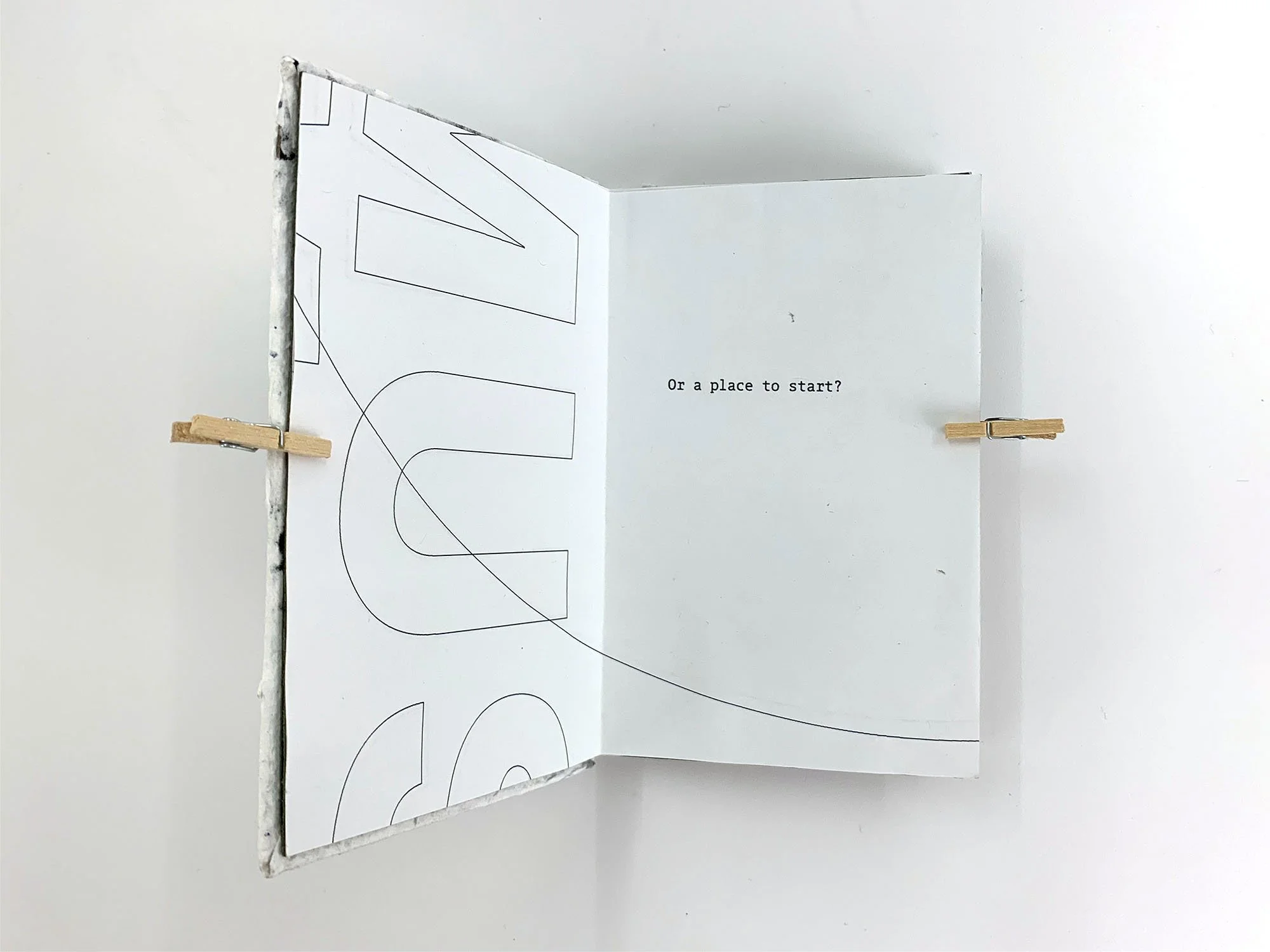
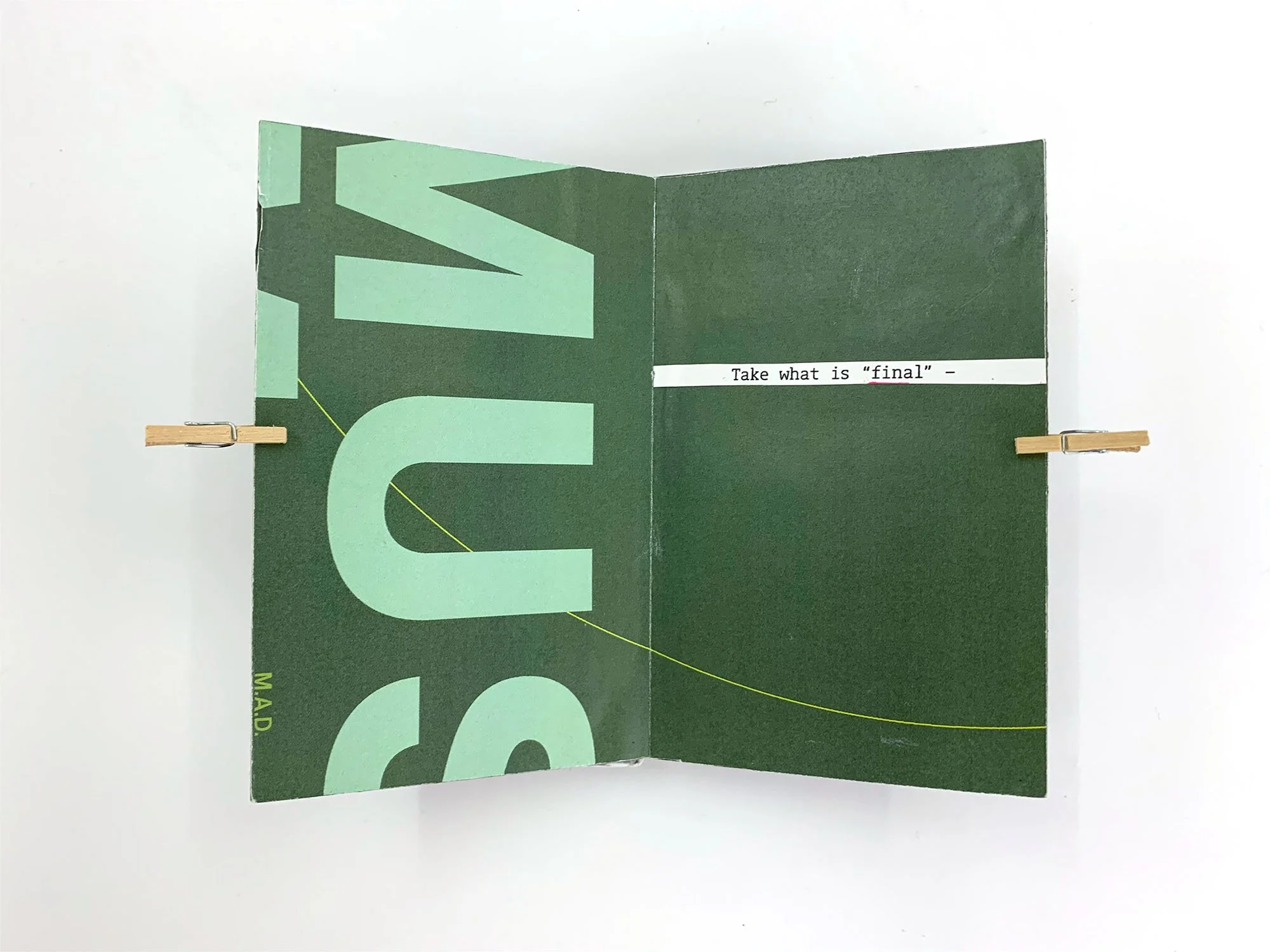
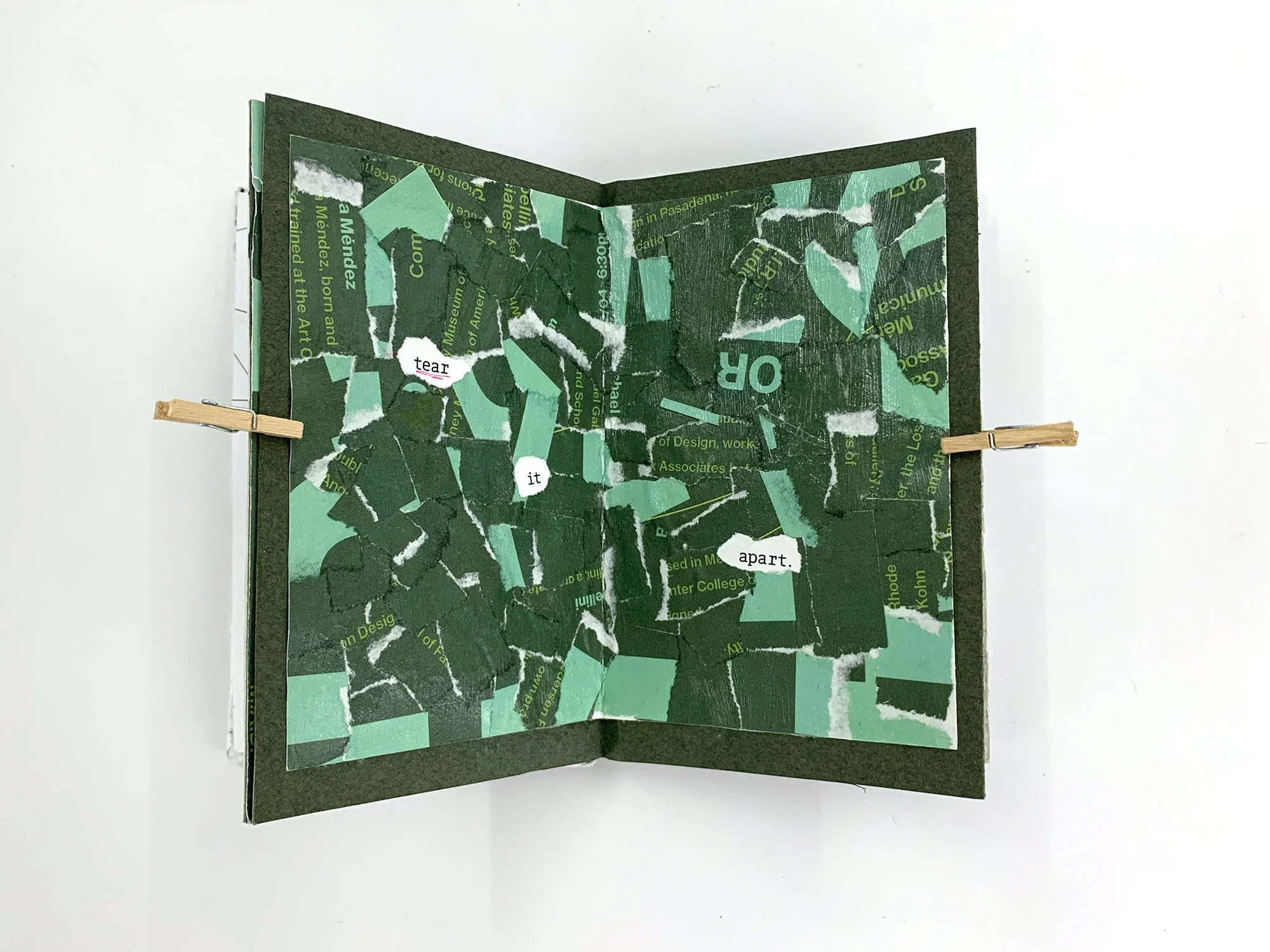
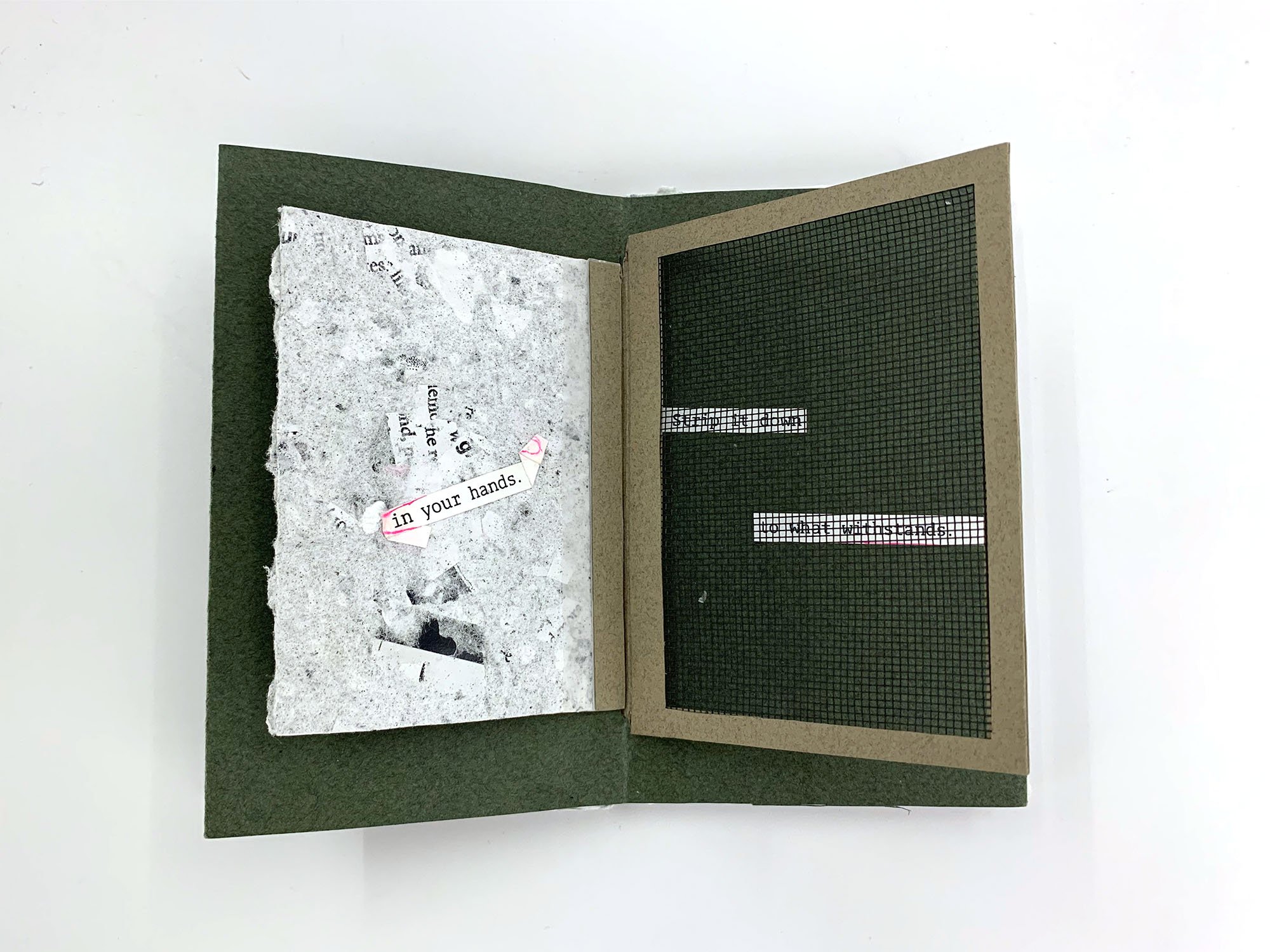
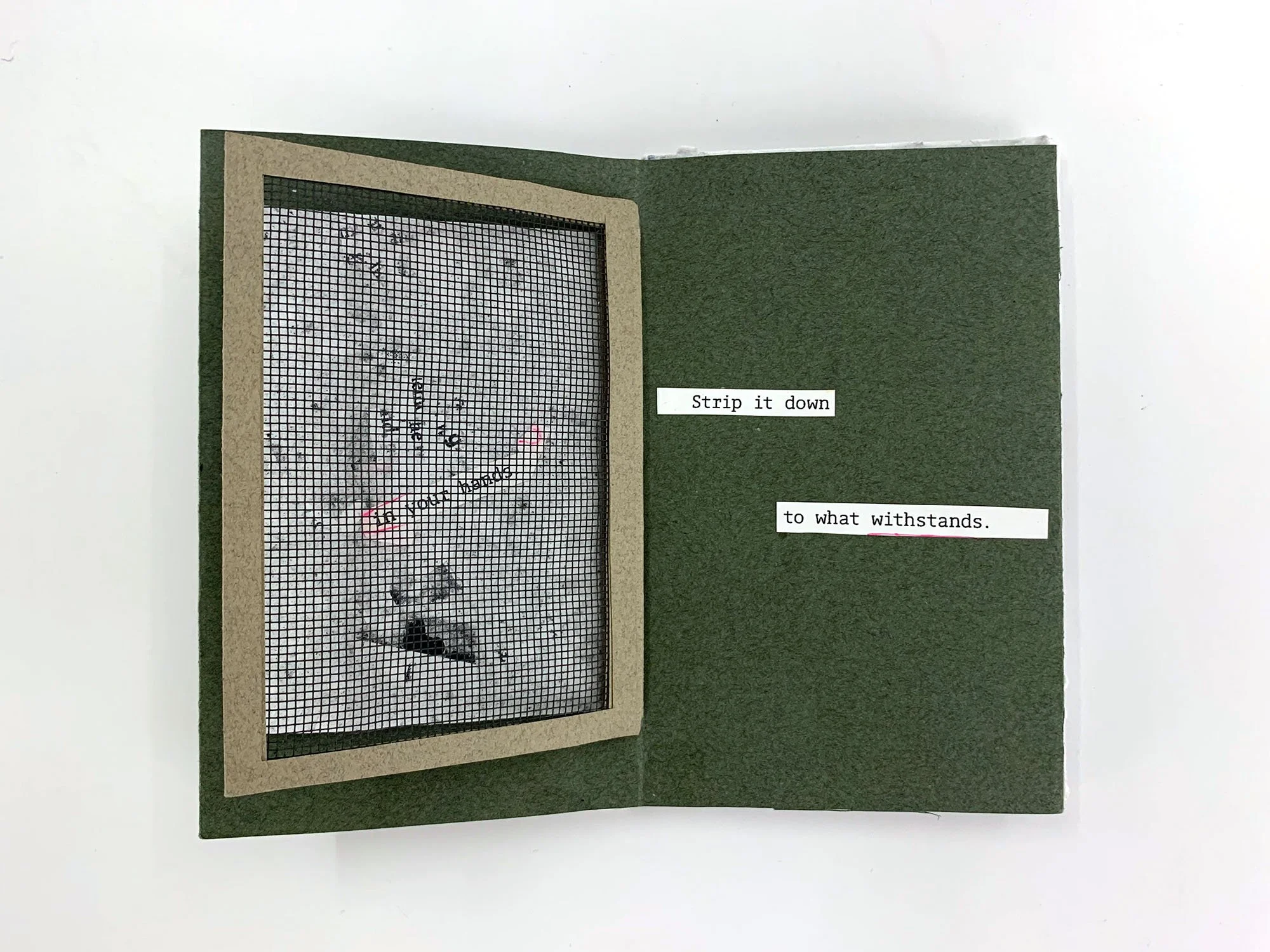
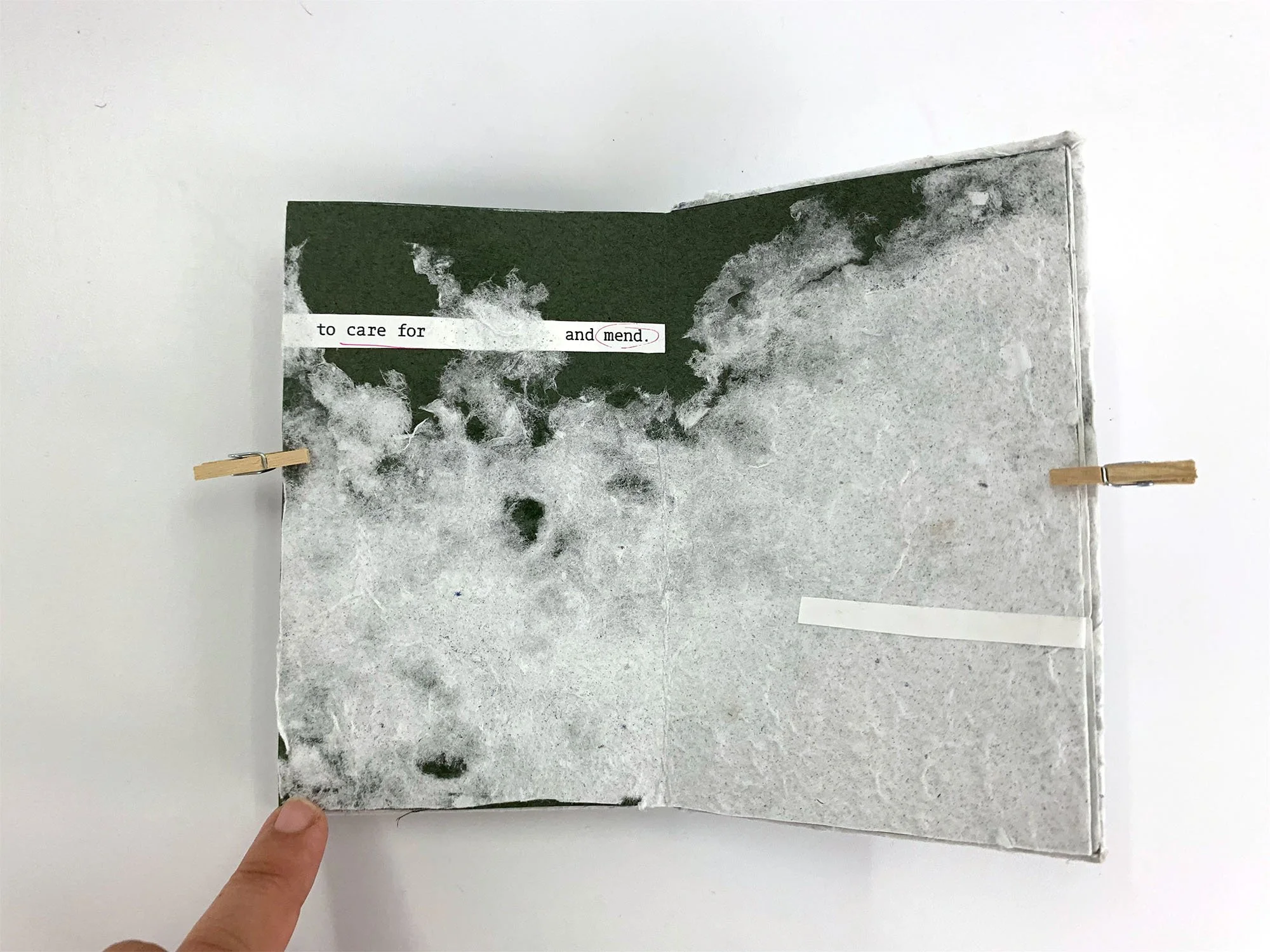
I made my own paper out of previously used readings and poster projects, and designed the book so that the last page poses a statement completed by the first. The poem guides the reader through the paper lifecycle as metaphor for giving new life to materials, designed objects or systems, and design thought.
The title is clipped from Thinking Fast and Slow, and I think the text’s discussion of slow thought is relevant to reflection in the design process. When we reach a place of finality, we must ask ourselves: what comes next?




Ideation
Some topics that came up for me as I was ideating were materials, process, reuse, worldview, and empathy.
I had hoarded paper scraps from previous poster projects in the semester. With this generated waste, I thought making paper would nicely bookend my first semester of graduate school, and extend a message I often think about: how can we creatively reuse materials to give them a new lease on life?
I first set out to produce a zine about mindfulness - mindfully considering material use and in addition, mindfully moving through the world with empathy. However, as I went through paper-making, I began to shift my thoughts toward process and its many applications.
Paper Making
Very obviously in front of me was the material process, as I worked with one form and moved it step by step to the next. Particularly with paper, it’s easy to see a clear lifecycle. Many scraps from my final output were put back into the pulp to render a new sheet. This process can be zoomed out to any material in the world, as we re-mold plastics and elements into new designed objects. Shamefully, a lot of these end their lives in a landfill.
-
I had hoped to pick up items from my neighborhood to use, but I came down with Covid and had to result to online ordering and waiting until isolation was through. When I was clear, I picked up picture frames from the dollar store, a screen printing frame, a variety of mesh, a large sponge, and a hand blender.
-
I embarked on the repetitive process of separating, tearing, and cutting my scrap paper. I set aside newspaper for my initial practice, then sorted the colors of my poster remnants. I had a vague idea of how I wanted my zine to look, and wanted to save a collection of pure white to make some cleaner pieces.
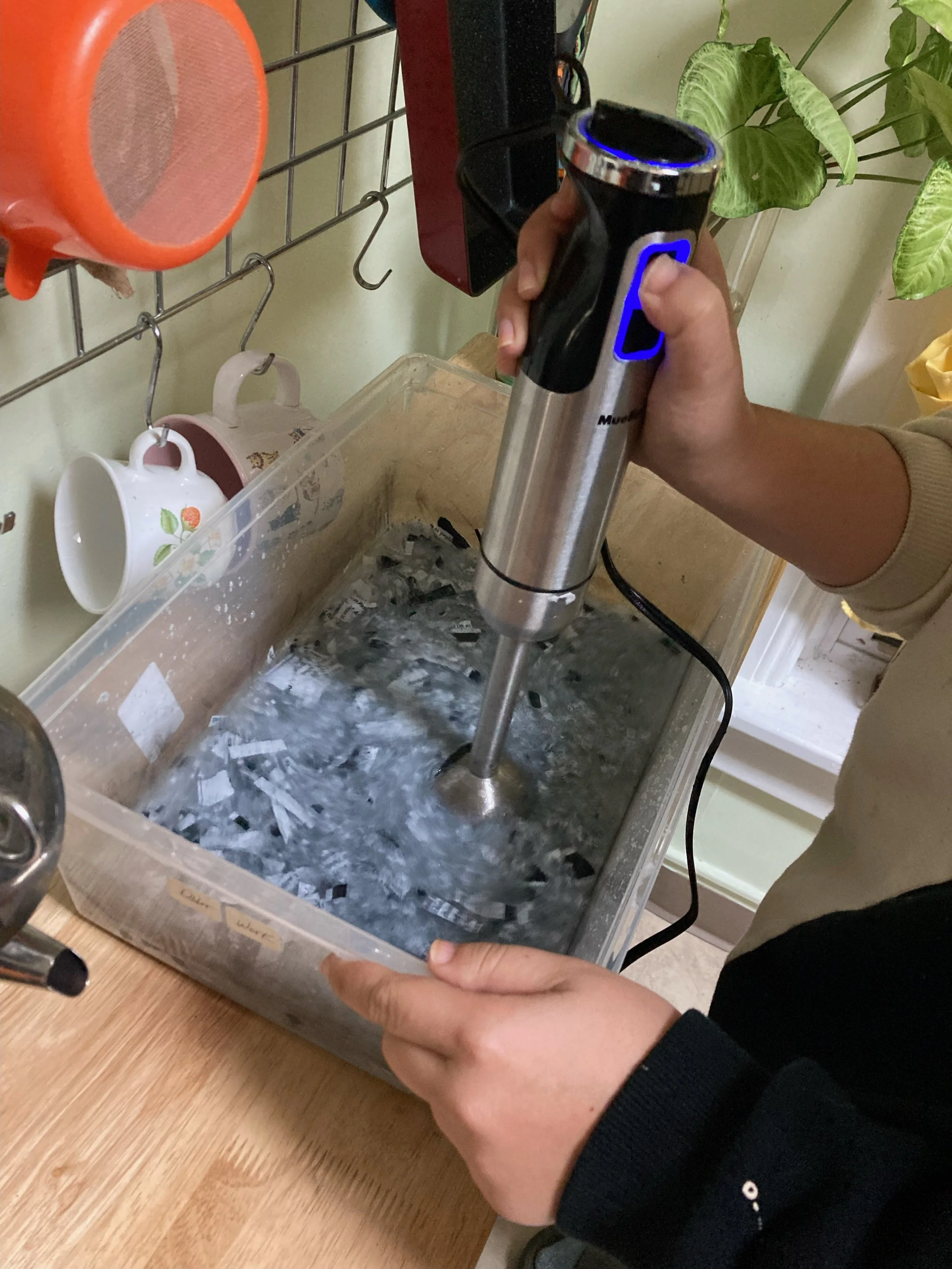
After sorting, I soaked the scraps in hot water and blended the mixture. Some paper took to blending better than others, and I found the smaller the better.
-
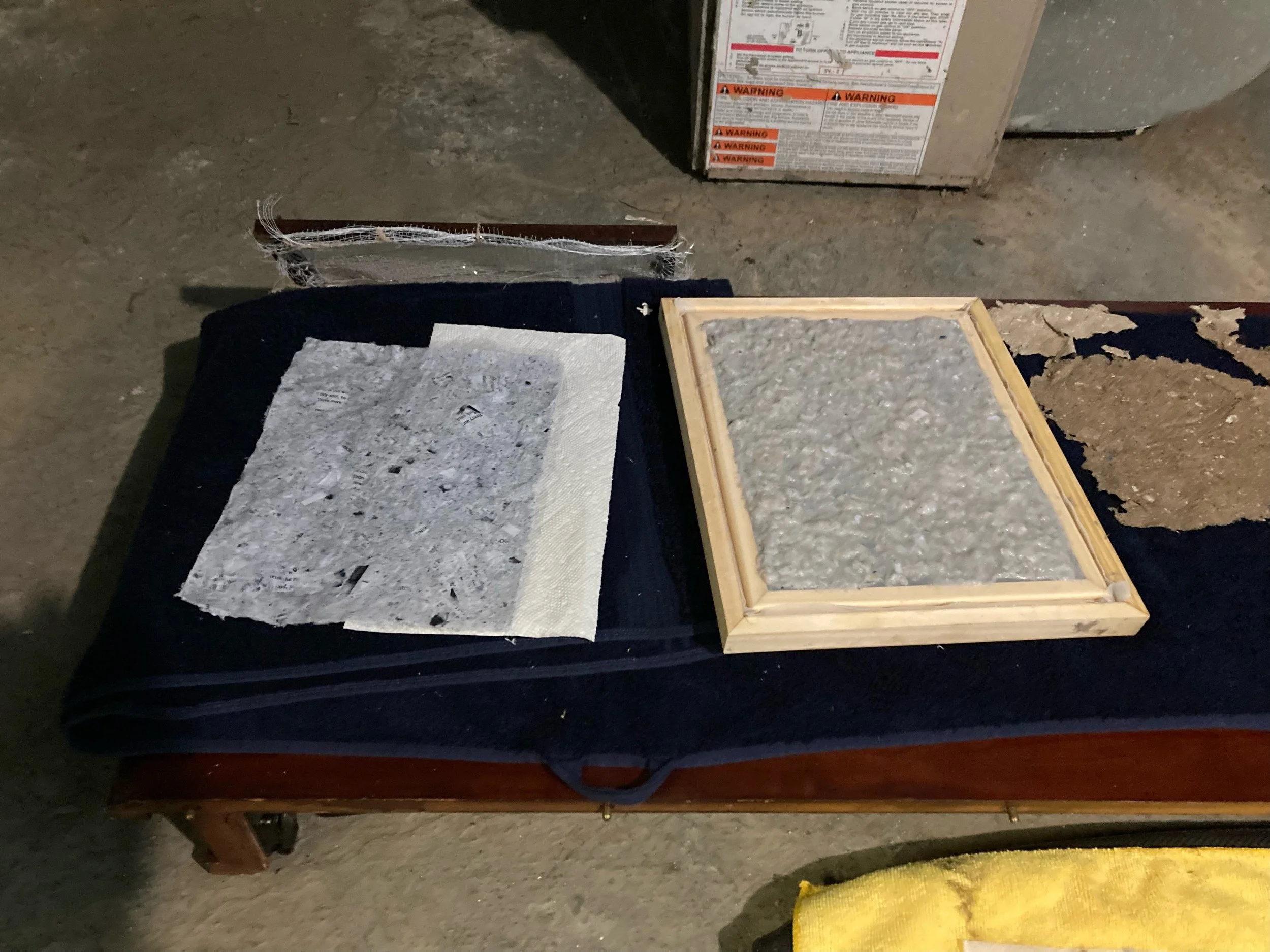
My first pass was with newspaper. The first sheet turned out like an egg carton. The more I made paper, the thinner and more delicate it became. I then experimented with chunks of paper, string, paint, and other thin materials. I loved the hint of words and comics in the final product, as well as little bits of string.
-
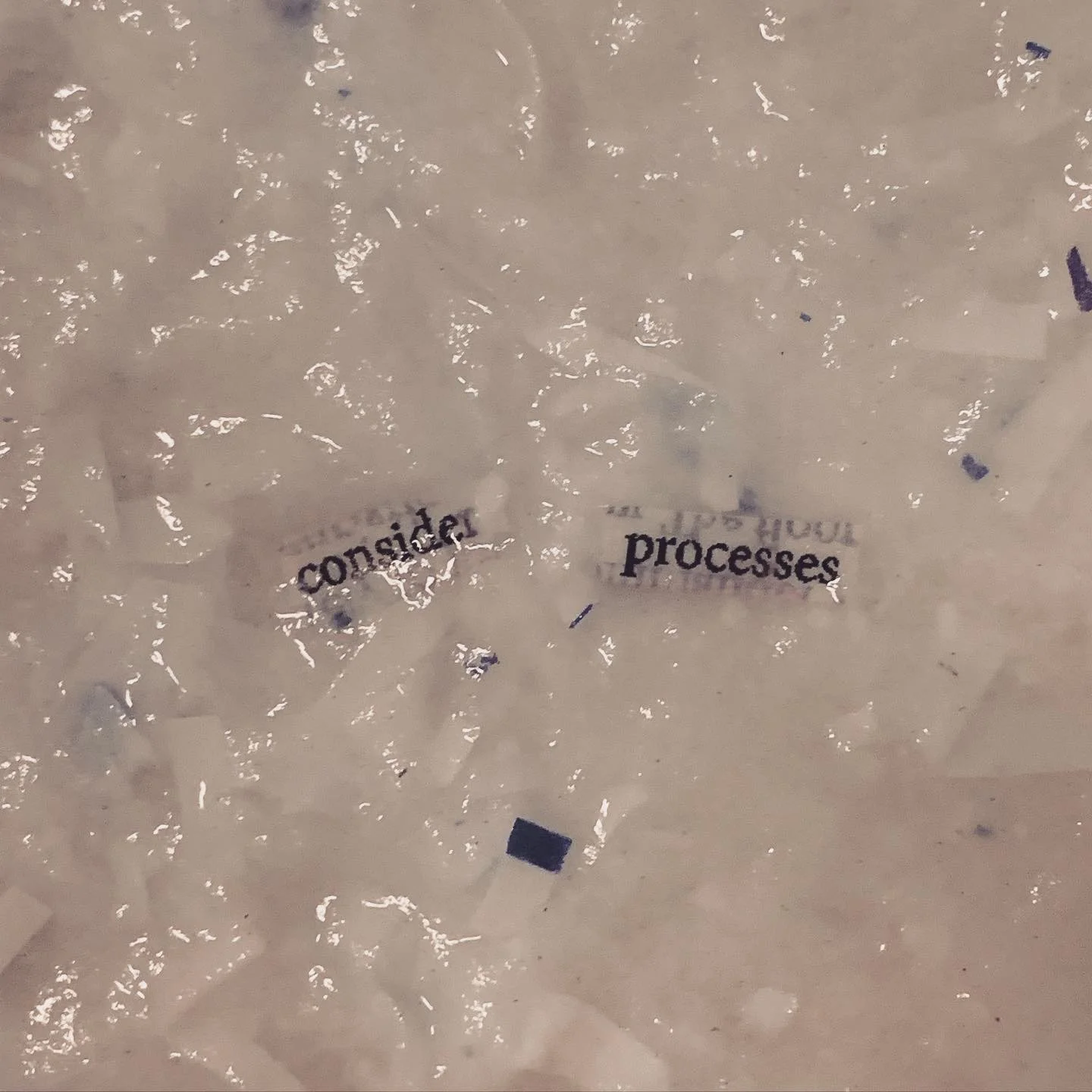
I moved to whiter scrap paper to get a few clean sheets. I dried all of my paper on the frames, which yielded a satisfying dual-sided texture. The mesh-side was smooth and the opposite was rough and tactile. During the wet stage, I was able to embed words into the sheets, which is what I used for the cover.